
From Assistant to Senior Stylist: How to Progress Faster in Your Hairdressing Career
The assistant years are some of the most important of your entire hairdressing career. They're also some of the most frustrating.
You're watching senior stylists work all day, you're absorbing everything around you, you know you're capable of more, but progress feels slow. The gap between where you are and where you want to be can feel enormous, and it's not always clear what you're supposed to be doing to close it faster.
The truth is that the stylists who progress quickly aren't always the most naturally talented. They're the ones who are intentional about their development. They treat their early career like a training ground rather than a waiting room, and that mindset makes all the difference.
Here's what that actually looks like in practice.
Take Ownership of Your Own Education
The first and most important shift you can make as an assistant is understanding that your development is your responsibility - not your salon's, not your manager's, not whoever happens to be mentoring you that week.

Salons vary enormously in how much structured training they provide. Some are excellent. Many are inconsistent. Most are busy, and education gets deprioritised when the diary is full. If you're waiting for training to come to you, you may be waiting a long time.
The assistants who progress fastest are the ones who are actively learning outside of salon hours - watching tutorials, studying technique, reading about the theory behind what they're doing on the floor every day. Not because they're told to, but because they're genuinely curious and genuinely hungry.
That curiosity is the thing that separates stylists who plateau early from stylists who keep growing for their entire career.
Master the Fundamentals Before You Chase the Trends
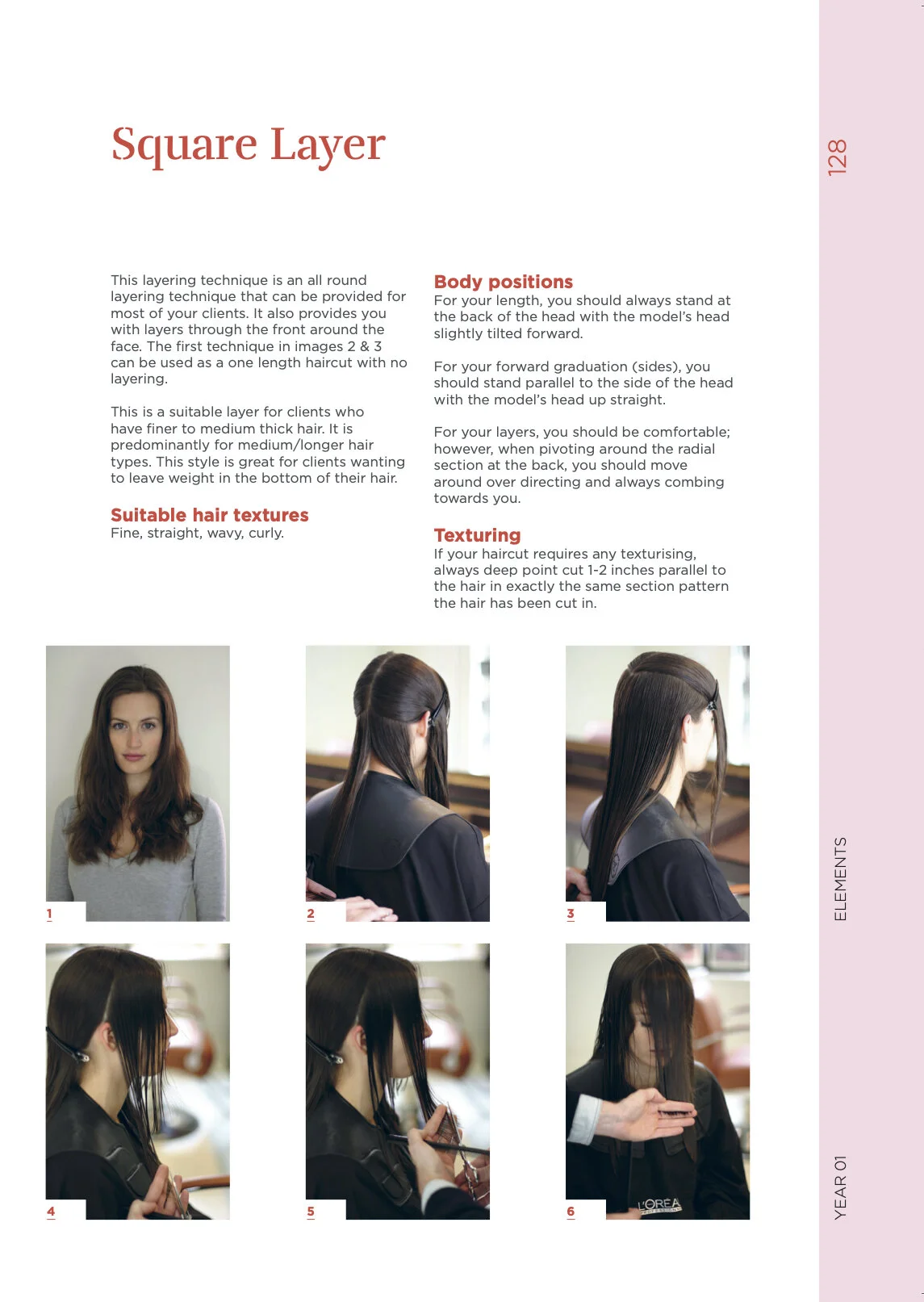
Every senior stylist you admire has one thing in common: an unshakeable command of the basics. The precision of their cutting line. The consistency of their sections. The way they hold their scissors, manage tension, and move through a haircut with complete confidence.
That foundation wasn't built by chasing the latest trending technique. It was built by practicing the fundamentals, over and over, until they became second nature.
This is the part that most junior stylists want to skip. It's understandable - fundamentals aren't exciting. Shag cuts and balayage are exciting. But a shag cut executed without solid layering technique looks amateur. A balayage applied without a proper understanding of colour theory is a gamble every time.
The stylists who build on fundamentals early have a ceiling that's significantly higher than those who don't. The techniques you learn later in your career will always be limited by the foundation underneath them. Make that foundation as strong as possible, as early as possible.
Be the Most Useful Person in the Room
This sounds simple. It isn't always easy.
Being the most useful person in the room means arriving early and leaving late. It means anticipating what the stylist you're assisting needs before they ask. It means being fully present during every service - not watching the clock, not on your phone, not just going through the motions on a blow-dry.
It also means asking good questions. Not constantly - senior stylists are busy and can't give a running commentary on everything they do - but thoughtfully. After a service, when there's a quiet moment: "Can I ask why you chose that angle on the graduation?" or "What made you decide to go softer on the face frame there?" Questions like these signal that you're engaged, that you're thinking, and that you're taking the work seriously.
Stylists who are seen as genuinely useful and genuinely curious get more opportunity. They get put on more clients sooner. They get taken to shoots and shows. They get trusted with more responsibility. None of that happens by accident.
Practice Outside the Salon
There is no substitute for time on the tools. The only way to get faster, cleaner and more confident is to practice, and the salon floor alone won't give you enough repetition. Build a practice network. Friends, family, fellow students - anyone willing to sit in a chair.
Keep a record of what you've practiced and what you want to work on next. A simple notes app on your phone is enough. The act of writing it down makes you more intentional about your development and gives you something to refer back to when you're planning your next practice session.
Study the Work You Want to Do
If you want to be a session stylist, immerse yourself in session work. Follow the people doing it. Watch how they work, how they think, how they talk about their craft. If you want to be a colourist, do the same with the colourists you most admire.
Clarity about the kind of stylist you want to become is one of the most powerful accelerators there is. When you know your direction, every tutorial you watch, every practice session you do, and every question you ask becomes purposeful rather than random.
This doesn't mean you need to have your entire career mapped out at 18. Direction evolves. But even a rough sense of where you're heading is infinitely better than no direction at all.
Be Patient - But Not Passive
Hairdressing is a craft. Crafts take time. There's no shortcut that replaces the hours behind the chair, the mistakes made and corrected, the slow accumulation of skill and confidence that only comes from experience.
But patience doesn't mean passivity. The stylists who progress fastest aren't the ones who wait longest - they're the ones who use their waiting time better than everyone else.
Use every quiet moment on the floor as an opportunity to observe. Use every slow week as a chance to practice. Use every piece of feedback, even the uncomfortable kind, as information rather than criticism. The stylist who does all of this will always outpace the one who simply turns up and waits for their time to come.

Your time will come faster than you think, if you're intentional about it.
A Structured Starting Point
If you're looking for a clear framework to guide your development as you progress from assistant to senior stylist — covering every fundamental technique and the theory behind it in a structured, progressive way — the Elements Education systemwas built exactly for this. It won't replace the hours on the floor. Nothing does. But it will make sure that every hour you spend practicing is built on a foundation that's solid, thorough and designed to take you all the way.