
How to Blow Dry Curly Hair: A Professional Guide
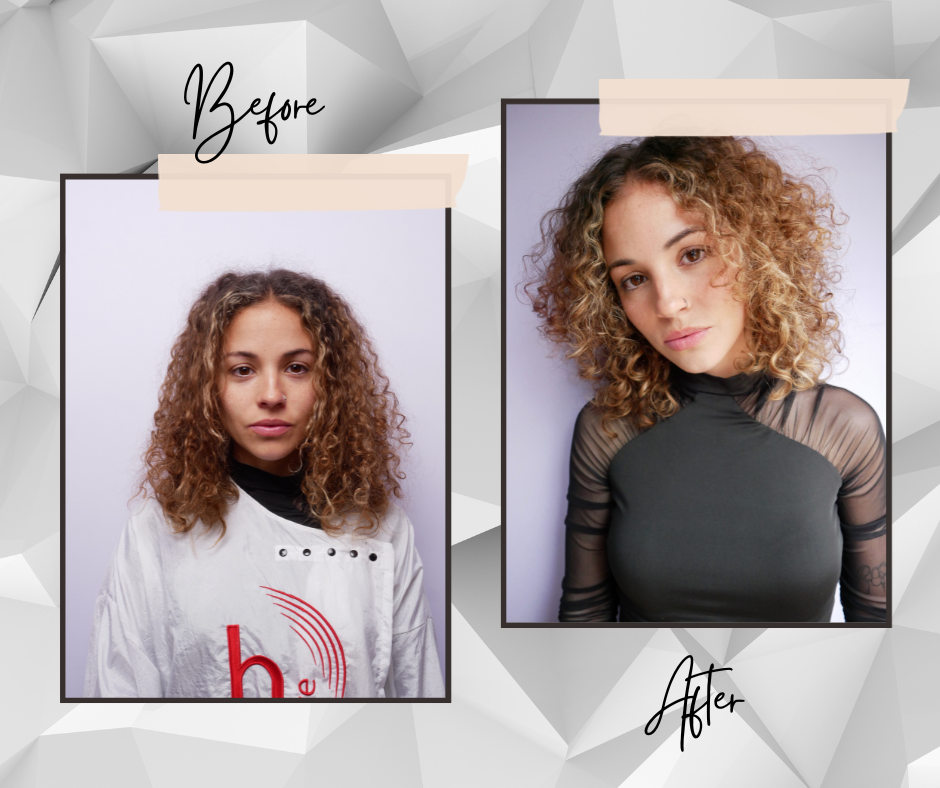
Curly hair is one of the most mishandled hair types in any salon. Clients with curls have often spent years, sometimes decades, being let down by stylists who treated their hair like straight hair that hadn’t cooperated yet. The result is a client base that arrives at your chair cautious, specific about what they want, and very quick to notice whether you actually understand their hair or not.
Getting curly hair right behind the chair isn’t just a technical skill. It’s a trust exercise. And the stylists who do it well don’t just produce a great result, they build some of the most loyal clients in any salon.
This guide covers everything you need to know about blow drying curly hair, from preparation and product to technique and finish.
Understanding Curly Hair First
Before you pick up a dryer, it’s worth understanding what you’re working with, because curly hair behaves differently from straight hair and requires a fundamentally different approach.
Curly hair tends to be drier than straight hair. The natural oils produced at the scalp travel less easily down a curved hair shaft than a straight one, which means the mid-lengths and ends are often significantly drier than the root area. This affects every product choice and every technique decision you make.
Curly hair is also more fragile when wet. The curl pattern creates more points of structural vulnerability along the shaft, and wet curly hair stretches before it breaks, meaning rough handling at the basin or aggressive towel drying can cause damage that doesn’t become visible until the hair is dry.
And curly hair shrinks. Significantly. A curl that sits at the shoulder when dry can reach the mid-back when wet. Always factor in shrinkage when discussing length with a curly client, and make sure they understand it too, before any scissors come out.
Preparation: The Blow Dry Starts at the Basin
The quality of a curly blow dry is largely determined before the dryer is even switched on. Preparation is everything.
Detangle with conditioner in, not after rinsing. Curly hair detangles most safely when it’s coated in conditioner and saturated with water. Work through the hair in sections with a wide-tooth comb or your fingers, starting at the ends and working upward. Rinsing before detangling creates unnecessary friction and breakage.
Don’t rub — squeeze. The instinct to towel dry hair vigorously is one of the most damaging things you can do to a curl pattern. Rubbing disrupts the cuticle, causes frizz and breaks up the curl formation before you’ve even started. Use a microfibre towel to gently squeeze excess water from the hair, press and release rather than rub.
Apply product to soaking wet hair. Curly hair products, leave-in conditioners, curl creams, gels, work best applied to hair that’s still dripping wet. The water helps distribute product evenly and activates the hold. Waiting until the hair is damp rather than wet means the product sits on the surface rather than penetrating the hair properly.
Product: Less Is Rarely More
Curly hair is thirsty. The temptation to go light on product to avoid weighing the hair down is understandable but usually counterproductive. Under-moisturised, under-defined curls frizz. Well-moisturised, well-defined curls don’t.
Layer your products. A standard curly hair product routine moves from lightest to heaviest, leave-in conditioner first to moisturise, then a curl cream or mousse for definition, then a gel to lock in the hold if the client wants more longevity. Each layer serves a different purpose. Skipping steps produces a less defined, less lasting result.
Distribute evenly and thoroughly. Apply each product in sections, working it through the hair from root to tip with your hands. Raking the product through with your fingers rather than scrunching it in at the ends gives more even coverage, particularly on thicker or denser hair where it’s easy to miss sections underneath.
Match the product to the curl type. Fine, loose waves need lighter products than dense, tight coils. The same curl cream that defines a type 3b curl beautifully can leave a type 2a wave looking greasy and flat. Know your curl types and adjust your product choices accordingly.
Technique: Diffusing vs Blow Drying Straight

There are two fundamentally different approaches to blow drying curly hair, and which one you choose depends entirely on what the client wants.
Diffusing — preserving the curl
Diffusing is the technique of drying curly hair with a diffuser attachment to reduce direct airflow and preserve the natural curl pattern. The goal is to dry the hair without disturbing the curl formation, producing a result that looks like the hair’s natural texture at its best, defined, bouncy and frizz-free.
The key to diffusing is patience and low heat. High heat and high airflow are the enemies of a defined curl, they create frizz by roughing up the cuticle before the curl has had time to set. Use low to medium heat, medium airflow, and work in sections, cupping the curls into the diffuser bowl and holding rather than moving the dryer around.
Encourage the client to avoid touching their hair while it’s drying. Every touch disrupts the curl formation and creates frizz. The hands-off rule during drying is one of the most valuable pieces of advice you can give a curly client for managing their hair at home.
Blow drying straight — smoothing the curl
When a curly client wants their hair straightened rather than defined, the approach changes entirely. This is a tension-based service that requires more time, more heat protection and more precision than straightening hair that’s naturally less textured.
Work in small sections, significantly smaller than you would on straight hair. Apply a strong heat protectant before any heat touches the hair. Use a round brush or paddle brush with consistent, firm tension and direct heat along the hair shaft from root to tip. The goal is to smooth the cuticle completely, which requires patience, rushing produces a result that looks smooth at the salon but frizzes within an hour of the client stepping outside.
Follow with a straightening iron through any sections that need additional smoothing, and finish with a cool shot and a light serum to seal the cuticle and add shine.
Managing Frizz: The Real Enemy
Frizz is the number one concern of almost every curly client, and understanding what causes it is the key to preventing it.
Frizz happens when the hair’s cuticle is raised and dry air penetrates the hair shaft, causing the individual strands to swell unevenly. The cuticle is raised by friction, by heat without protection, by drying in a cold or draughty environment, and by humidity after the hair has dried.
In the salon:
Minimise handling during the drying process. Keep heat on a consistent medium setting rather than switching between high and low. Finish every section with a cool shot to seal the cuticle before moving on.
At home:
Give clients a realistic picture of what their curls need to behave well between salon visits, a silk or satin pillowcase, a pineapple or loose braid at night, a light refreshing spray in the morning. Clients who understand how to maintain the result you’ve given them come back happier and more often.
The Consultation Is Half the Service
Curly clients often arrive with a history of bad salon experiences. They’ve been told their hair is difficult, had their curls brushed out dry, or left with a result that looked nothing like what was discussed. Before you do anything, listen.
Ask specifically: how do they normally wear their hair? What do they love about it and what frustrates them? What’s their home routine? How much time do they realistically spend on their hair in the morning?
The answers to these questions shape every decision you make, from the products you choose to whether you diffuse or straighten, from how much you trim to what advice you give at the end of the appointment. A curly client who feels genuinely understood in the consultation is a curly client who books again.
Curly hair rewards the stylists who take the time to understand it. The clients are loyal, the results are visible and the word-of-mouth is powerful, because genuinely good curly hair services are still rare enough that the stylists who do them well become the ones people travel across the city for.
Master the fundamentals, earn the trust, and the rest follows.
Want to see these techniques in action? Our Cutting and Styling masterclasses cover a wide range of techniques across all hair types: available to watch any time with a Hairdressing Live subscription from €25 a month.